Can Technology Make Cooked Meat Raw Again
This time of twelvemonth, most fridges are stocked upward with food and drinks to share with family and friends. Let'south not make ourselves and our guests sick past getting things wrong when preparing and serving food.
As the weather warms upwardly, so does the environment for micro-organisms in foods, potentially assuasive them to multiply faster to chancy levels. And so put the drinks on ice and keep the refrigerator for the nutrient.
But what are some of those food rubber myths we've long come to believe that aren't actually true?
Myth 1: if you've defrosted frozen meat or chicken you can't refreeze information technology
From a safety point of view, it is fine to refreeze defrosted meat or chicken or any frozen food as long as it was defrosted in a refrigerator running at v°C or beneath. Some quality may exist lost by defrosting then refreezing foods as the cells break down a piddling and the food tin can become slightly watery.
Another option is to cook the defrosted food and and then divide into small portions and refreeze once information technology has stopped steaming. Steam in a closed container leads to condensation, which tin result in pools of water forming. This, combined with the nutrients in the nutrient, creates the perfect environment for microbial growth. So it's e'er best to look about 30 minutes before refrigerating or freezing hot food.
Programme ahead and then food can be defrosted in the fridge, especially with large items such every bit a frozen turkey or roll of meat. If left on the bench, the external surface could be at room temperature and micro-organisms could be growing rapidly while the eye of the piece is all the same frozen!
Myth two: Wash meat before you prepare and/or melt information technology
It is not a good idea to wash meats and poultry when preparing for cooking. Splashing h2o that might contain potentially hazardous bacteria effectually the kitchen can create more of a take chances if those bacteria are splashed onto set-to-consume foods or food grooming surfaces.
It is, all the same, a good idea to wash fruits and vegetables before preparing and serving, especially if they're grown nearly or in the ground as they may carry some dirt and therefore micro-organisms.
This applies particularly to foods that will be prepared and eaten without further cooking. Consuming foods raw that traditionally have been eaten cooked or otherwise processed to kill pathogenic micro-organisms (potentially deadly to humans) might increase the risk of food poisoning.
Fruit, salad, vegetables and other prepare-to-eat foods should be prepared separately, away from raw meat, craven, seafood and other foods that need cooking.
Myth iii: Hot food should be left out to absurd completely before putting it in the refrigerator
It's non OK to go out perishable nutrient out for an extended time or overnight before putting it in the fridge.
Micro-organisms tin grow rapidly in food at temperatures between 5° and 60°C. Temperature control is the simplest and virtually effective way of controlling the growth of bacteria. Perishable food should spend as little time as possible in the 5-60°C danger zone. If food is left in the danger zone, be aware information technology is potentially unsafe to eat.
Hot leftovers, and any other leftovers for that matter, should go into the refrigerator in one case they have stopped steaming to reduce condensation, within about xxx minutes.
Big portions of hot food will cool faster if broken down into smaller amounts in shallow containers. Information technology is possible that hot nutrient such every bit stews or soup left in a bulky container, say a two-litre mixing bowl (versus a shallow tray), in the refrigerator can take nearly 24 hours to absurd to the safe zone of less than 5°C.
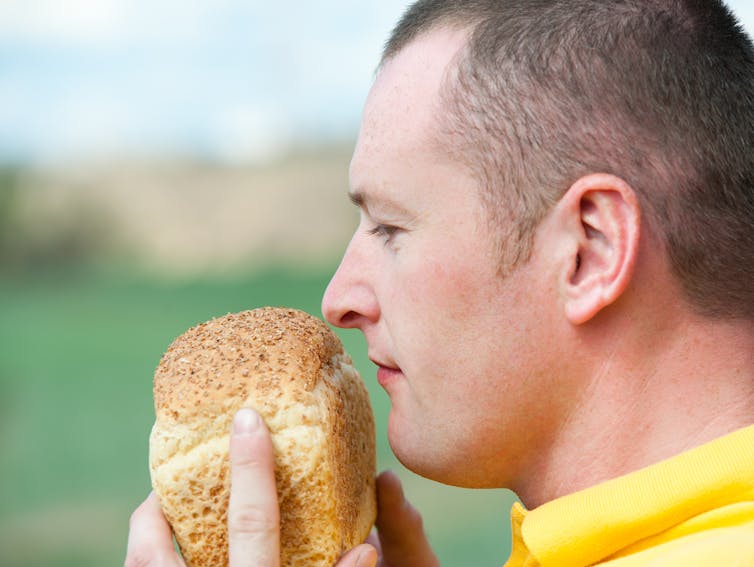
Myth iv: If it smells OK, then it's OK to eat
This is definitely not always truthful. Spoilage bacteria, yeasts and moulds are the usual culprits for making food scent off or become slimy and these may not brand you lot ill, although it is always advisable not to eat spoiled food.
Pathogenic bacteria tin grow in food and not crusade any obvious changes to the food, so the best option is to inhibit pathogen growth by refrigerating foods.
Myth 5: Oil preserves food then it tin be left at room temperature
Adding oil to foods will non necessarily impale bugs lurking in your food. The opposite is truthful for many products in oil if anaerobic micro-organisms, such as Clostridium botulinum (botulism), are present in the food. A lack of oxygen provides perfect atmospheric condition for their growth.
Outbreaks of botulism arising from consumption of vegetables in oil – including garlic, olives, mushrooms, beans and hot peppers – have mostly been attributed to the products not being properly prepared.
Vegetables in oil can be made safely. In 1991, Australian regulations stipulated that this class of product (vegetables in oil) tin can be safely made if the pH (a measure of acid) is less than 4.6. Foods with a pH below 4.six practice not in full general support the growth of food-poisoning bacteria including botulism.
Then proceed food out of the danger zone to reduce your guests' risk of getting food poisoning this summertime. Check out other food safe tips and resources from CSIRO and the Food Safety Information Council, including testing your food safety cognition.
Source: https://theconversation.com/you-can-thaw-and-refreeze-meat-five-food-safety-myths-busted-51125
0 Response to "Can Technology Make Cooked Meat Raw Again"
Post a Comment